Turkey Vulture
With a wingspan of up to 6 feet, and sharp, curved talons measuring up to 3 inches long, turkey vultures are the most common and widespread vultures in the Americas. Their name comes from the fact that they closely resemble a turkey. However, unlike wild turkeys, turkey vulture heads don’t change color to indicate mood. They’re always a deep, blood red.
Turkey vultures are usually very social animals, except for when they’re circling the skies in search of a meal. They often nest in large groups, and during the breeding season, multiple males often surround a lone female and perform a sort of ritual dance, until the female chooses the male whose dance she likes the most. From there, they will mate for many years, though unlike geese, don’t mate for life.
In other words, turkey vulture couples tend to get sick of each other after a few years, and go on to find other mates to breed within the community.
Once they mate, turkey vultures will find a high place to lay the eggs. Unlike many large birds, turkey vultures do not actually build nests. Instead, they find a place where the eggs won’t roll away, and where their hatchlings will be contained and dry. The parents take turns protecting the eggs and, later on, raising the young.
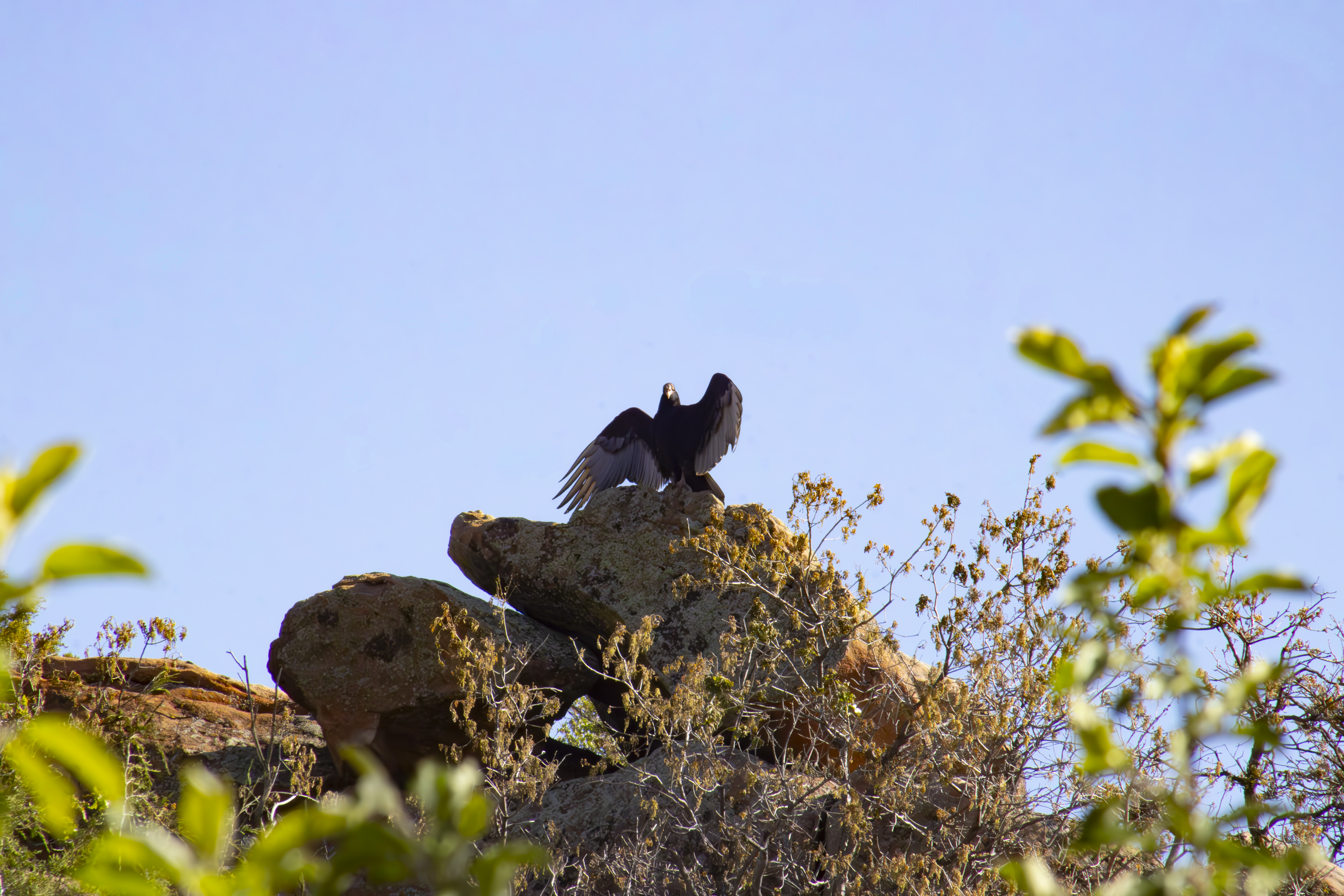
During our hike in the valley one spring morning, Eric and I stumbled upon a turkey vulture sunning itself on a rock. This behavior is awesome but not uncommon. Turkey vultures are perpetually cold, especially in the morning after their body temperature drops to 93 degrees Fahrenheit as they sleep. On top of that, when it gets really hot outside, turkey vultures will purposefully take a dump on their legs so that it cools them off as it evaporates. This behavior is known as Urohydrosis.
Some scientists have hypothesized that, due to turkey vultures being mostly scavengers who have a habit of pooping on themselves to stay cool, they will sun themselves to kill off harmful bacteria with the UV light.
As gross as they are, turkey vultures are still extremely important for the natural environment, and are strictly protected by the Migratory Species Act of 1918.
- << Prev
- Next
