
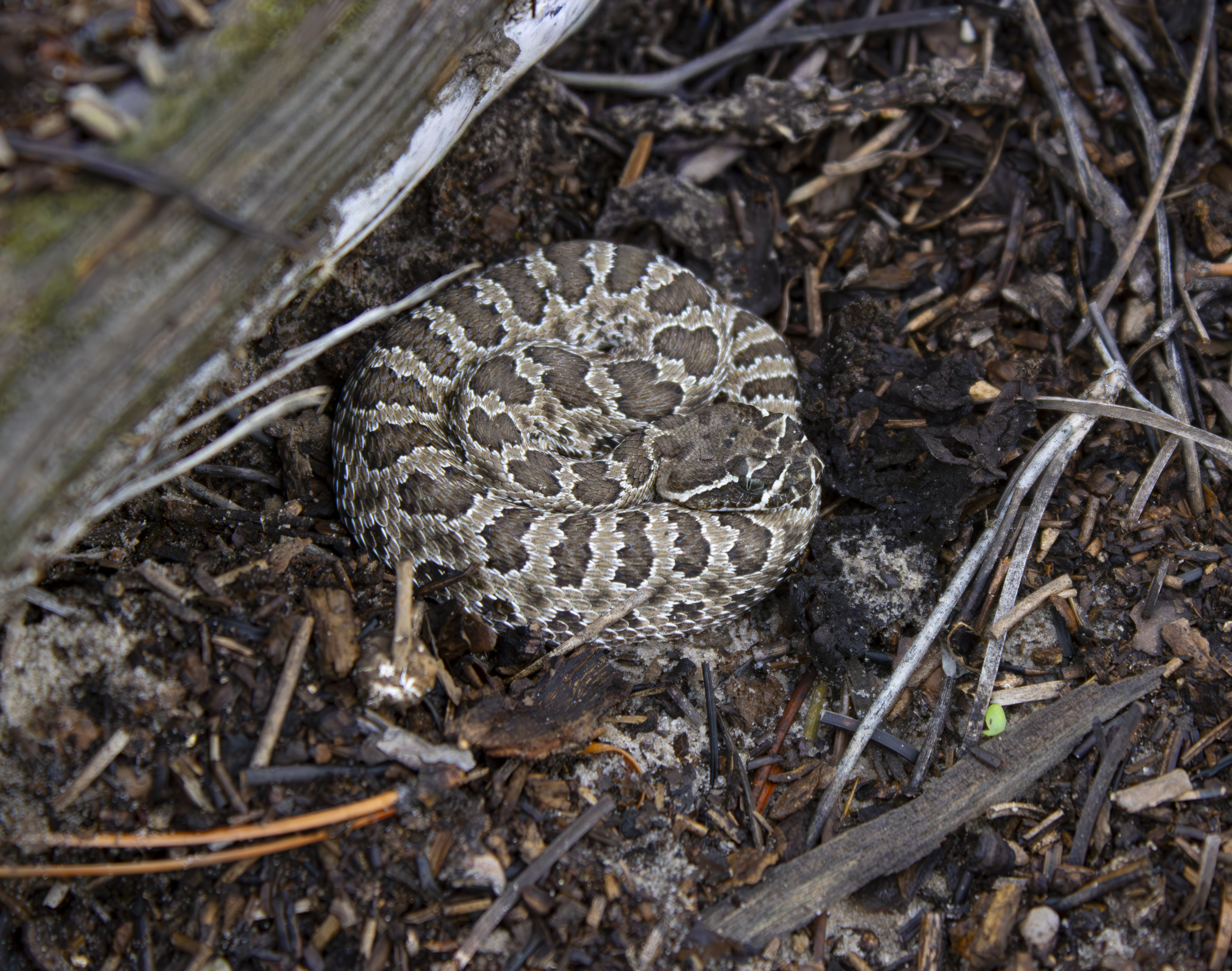
Taken 8-30-2025
Western Massasauga Rattlesnake:
There are dozens of distinct species of rattlesnakes throughout North America. Pictured above is a very small, very young Western Massasauga Rattlesnake. This particular species of rattlesnake is classified as a State Special Concern in Colorado due to their declining populations. In other words, it is quite rare to encounter a Western Massasauga rattler.
The particular snake I photographed was no more than 6 inches long, hiding underneath a small, exposed Ponderosa root on the Ken Caryl hogback. It remained completely still the entire time I was around it, and did not mind my camera getting well within striking distance to capture a series of awesome pictures, including the one above.
Perhaps, that wasn't my brightest idea. However, contrary to popular belief, baby rattlesnakes are no more dangerous than adult rattlesnakes. Just like adult rattlesnakes, baby rattlesnakes can control their venom and are not aggressive.
When threatened, both young and old rattlesnakes will hiss and rattle their tail, before making a run for it. They will only bite if they think they need to in order to survive, but even then, they're capable of delivering bites without secreting venom. It takes days to weeks for a rattler to replenish its venom, which it relies on in order to paralyze their prey. Unlike boa constrictors, rattlesnakes do not strangle their prey to death, so they need to use their venom to secure a meal.
All that said, it's important to respect a rattlesnake's personal space. And always call 9-1-1 if you merely suspect that you've been bitten by a rattlesnake, just to be safe.
