Note: Eric and I have been hiking in Ken Caryl Valley for about a year. Between us, we have thousands of pictures of nature from nearly every week of the past year. Might as well catalogue those pictures, to share and identify what we’ve seen and discovered over the past year. These are not in any particular order. I just like to have a picture and description of every animal and plant we’ve come across.
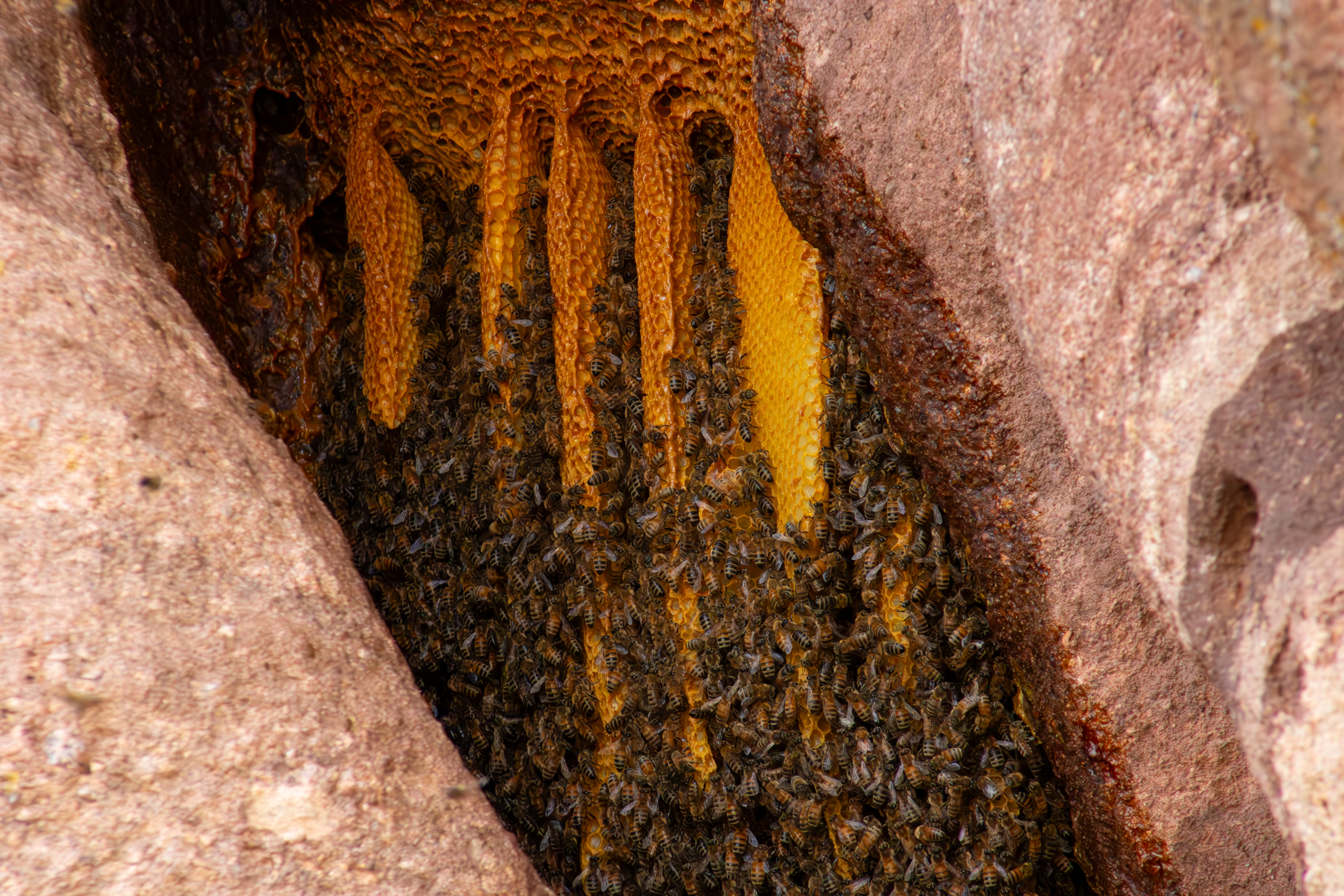
Taken 3-23-2026
A Giant Hive of Honeybees
Nestled in the 290-million-year old red rocks of the Fountain Formation in Ken Caryl Valley, is a giant hive of Honeybees that has been there for several years. While honeybees thrive in Colorado, they are not native to the state. Honeybees are native to Europe, and were brought over to the United States by settlers starting way back in the 1600s.
However, they're still extremely important pollinators, and we must do everything we can to prevent their dwindling populations from collapsing any more.
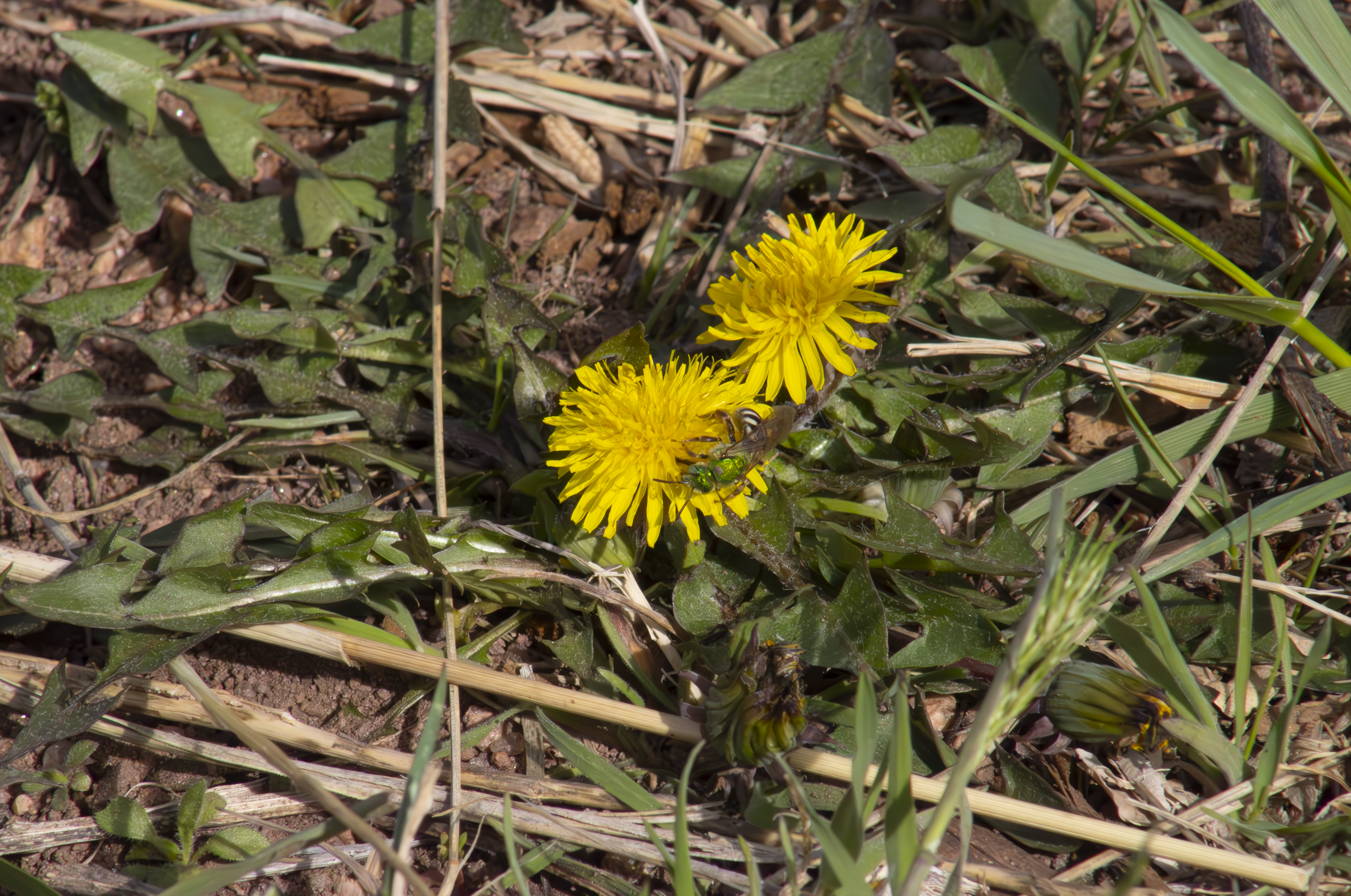
Taken 3-23-2026
Female Fine-Lined Sweat Bee
Fine-Lined Sweat bees are not supposed to appear until April, at the earliest. Yet, this female was spotted pollenating a pair of (also early) Dandelions on March, 23, 2026, a few days after Colorado shattered multiple heat records in a row. Female fine-lined sweat bees are only half-green, while males are entirely emerald green. Beyond that, not much is really known about them, because they're just not that interesting (apparently).
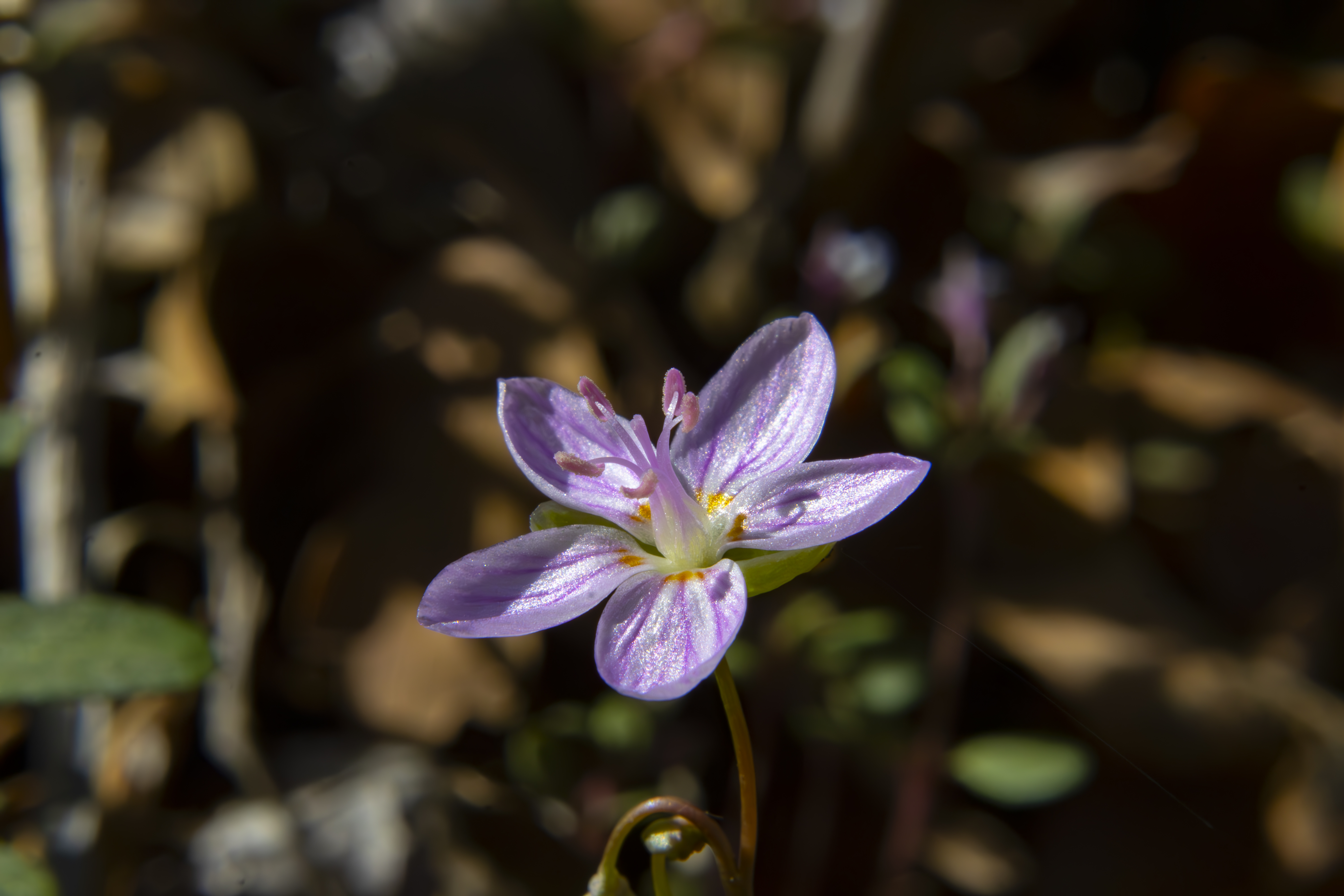
Taken 4-13-2025
Note: A different, more recent picture of a spring beauty will be used.
Spring Beauty:
The Spring Beauty is a favorite native wildflower of mine. I used a macro-lens to capture this photo, because Spring Beauties are only a couple inches tall and about as wide as a pinky nail. They typically bloom in mid-April, which is exactly when this photo was taken in 2025. Spring Beauties can be either white, pink and white, or pink all around. When summer comes along, the Spring Beauties go away until the following spring.
Taken 2-23-2026
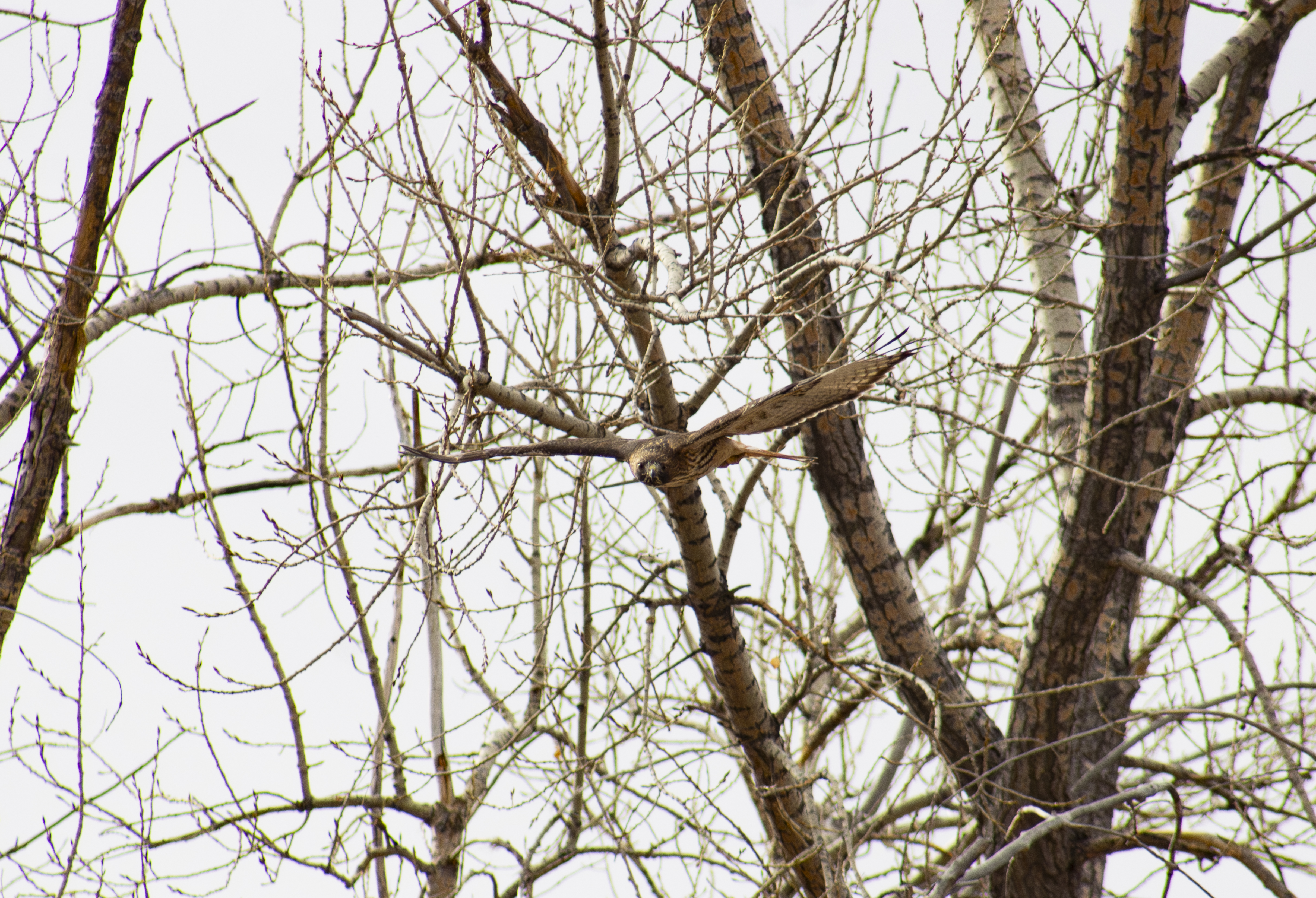
Red-Tailed Hawk In Flight:
For the record, I have no idea how I got this amazing shot of a red-tailed hawk flying towards me, it's eyes staring directly into my camera. Red-tailed hawks, (AKA chickenhawks) are one of America's most prevalent hawks. They're also one of the few species in North America that have only benefitted from humans' encroachment on its territory.
They're keen hunters in open fields, and will either wait for their prey perched atop trees and fenceposts, or while they circle the skies above in a holding pattern.
Red-Tailed hawks come in many different colors, usually depending on where they live. The Red-Tailed hawks I typically see in Colorado are known as Calurus colored, which means they have a dark red-brown head and back, a dappled, white belly, and long, red tail feathers.
While Red-Tailed hawks are classified as a species of least concern, collecting their feathers is illegal unless one has the proper permits or is part of a Native American tribe.
Taken 7-3-2024
Merriam's Wild Turkeys:
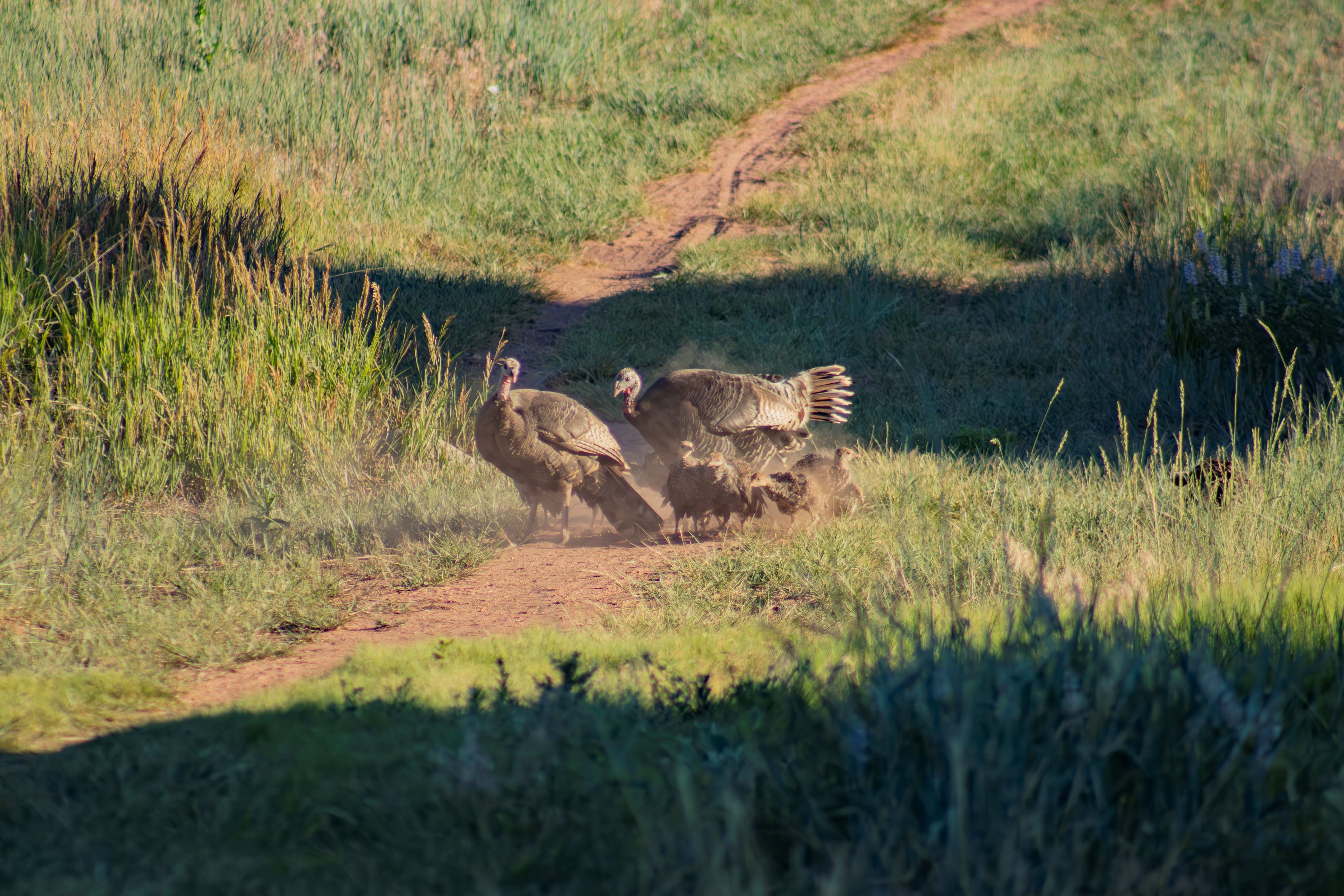
The United States is home to several different subspecies of wild turkeys. Pictured above is a family of Merriam's wild turkeys, which are most commonly found in the western States. Most male turkeys (AKA toms) have a tuft of long, hair-like feathers sticking out of their chests called beards, while most female turkeys (AKA hens) do not. However, bearded hens and beardless toms are not uncommon.
Contrary to popular belief, wild turkeys can fly and roost at night in trees. They're not long-distance fliers, but they can fly up to 300 yards and reach speeds of up to 55 miles per hour. Most of the time, however, turkeys prefer to stay on the ground during the day, and only fly in the evenings to roost in the trees, away from predators.
One can also tell a wild turkey's mood by the color of their heads. If a turkey's head is red and/or white, it signals that they are in an excited or angry state. If a turkey's head is a darker shade of blue, it signals that its relaxed, but not threatened. If a turkey's head turns a pale shade of blue, it signals that it feels afraid and/or submissive.
Evidently, the family of Merriams I photographed were feeling quite relaxed as they bathed in the ancient red sand.
Also, wild turkeys are classified as game birds, which means that while hunting them is strictly regulated, it is perfectly legal to collect their feathers.
Desert Larkspur
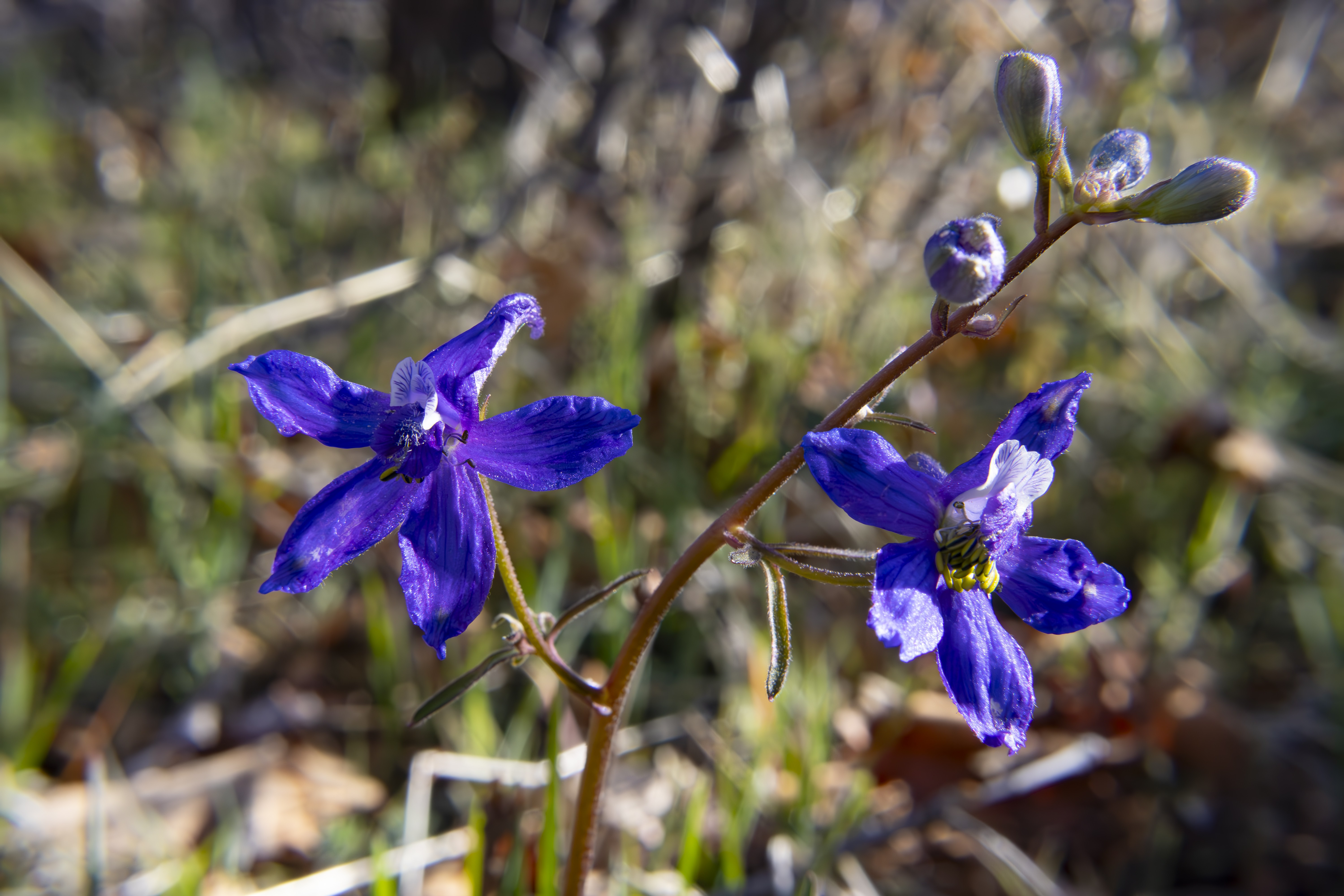
Blooming between April and June in Colorado, the Desert Larkspur is a desert-dwelling flower that ranges in colors from dark purple to snow white. They're an important part of the desert ecosystem, as they provide nutrients to pollinators of all kinds. However, they're very toxic if eaten, which explains why there are so many Desert Larkspurs in the valley.
Taken 4-12-2025
Mule Deer
Taken 3-23-2026
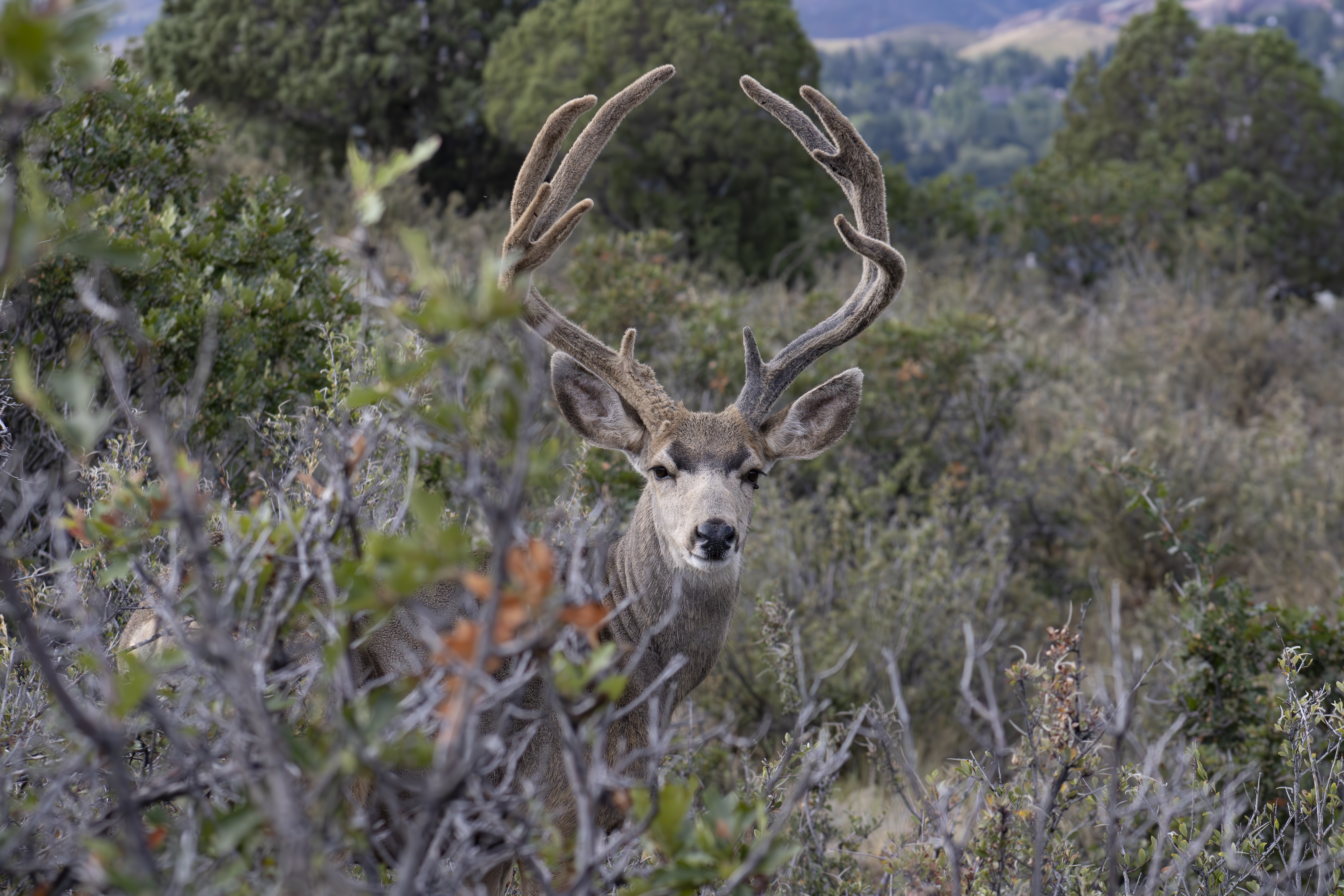
Taken 8-30-2025
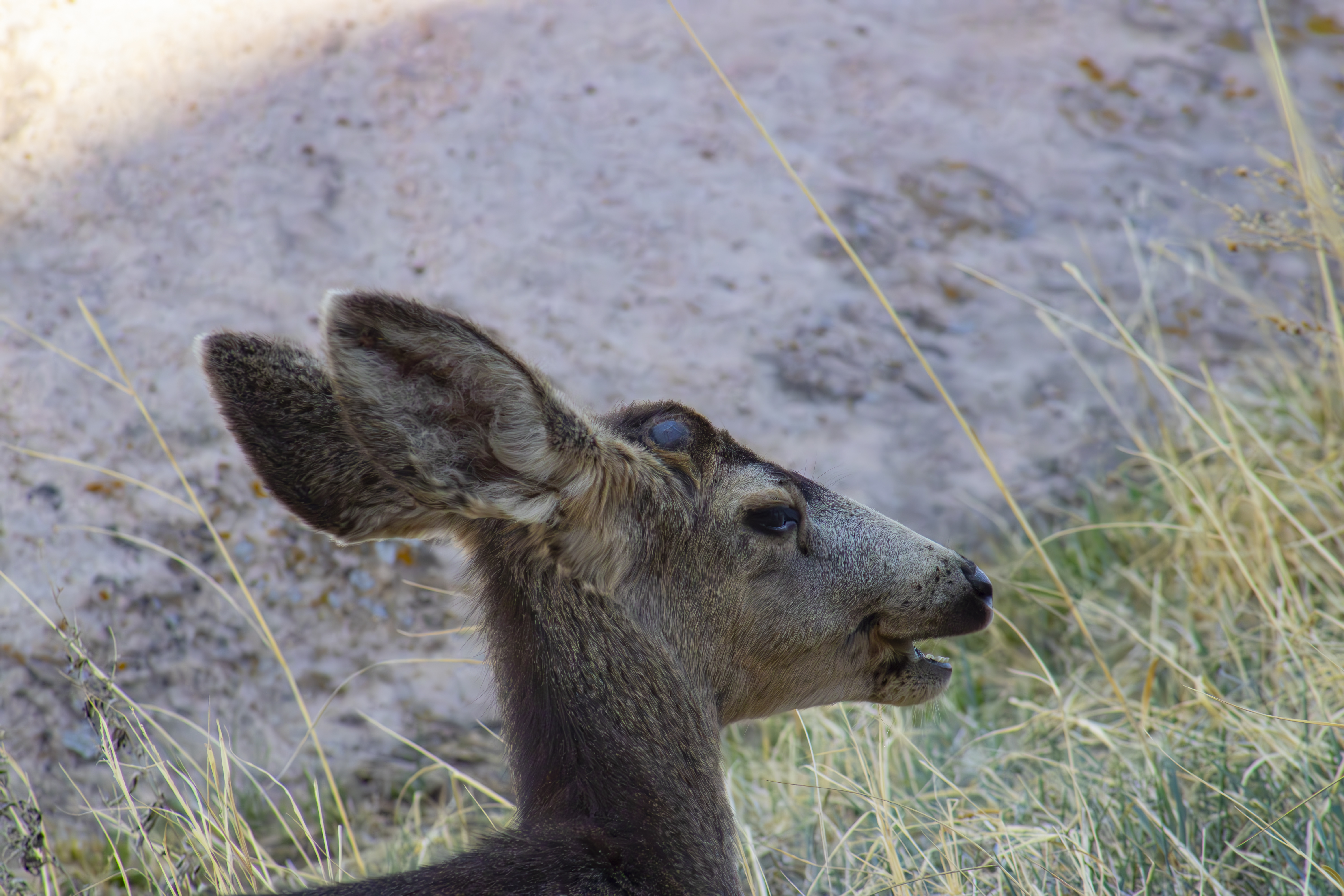
In 1900, president Theodore Roosevelt signed the Lacey Act into law. Prior to this, most of America's wildlife were hunted to the brink of extinction, including the now abundant Mule Deer. Roosevelt wasn't anti-hunting at all, as he was a hunter himself. Rather, he witnessed American settlers lay waste to the wildlife throughout the 1800s. Not only did the settlers hunt animals for food and hides, but they decimated entire populations in hopes of starving the Native Americans into leaving their land. Unfortunately, this strategy worked.
Bison were the settlers' main target. By 1900, fewer than 300 bison remained in the entire world. Luckily, Mule deer were far more abundant in 1900, but even their populations suffered tremendously due to overhunting and the settlers' western expansion. It is estimated that there were roughly 15 million mule deer in 1800. One hundred years later, fewer than three million Muleys roamed the west.
Theodore Roosevelt's conservation efforts drastically improved the health and populations of all of North America's wildlife and wilderness. Within 50 years of the Lacey Act being signed into law, Mule Deer numbers had jumped up to around 30 million.
Today, Mule Deer are everywhere in Ken Caryl Valley. Due to Ken Caryl's own conservation efforts, humans and deer have learned to coexist rather well in the neighborhood. In fact, the deer seem to be a little too comfortable in Ken Caryl at times.
To be continued...
Spotted Towhee
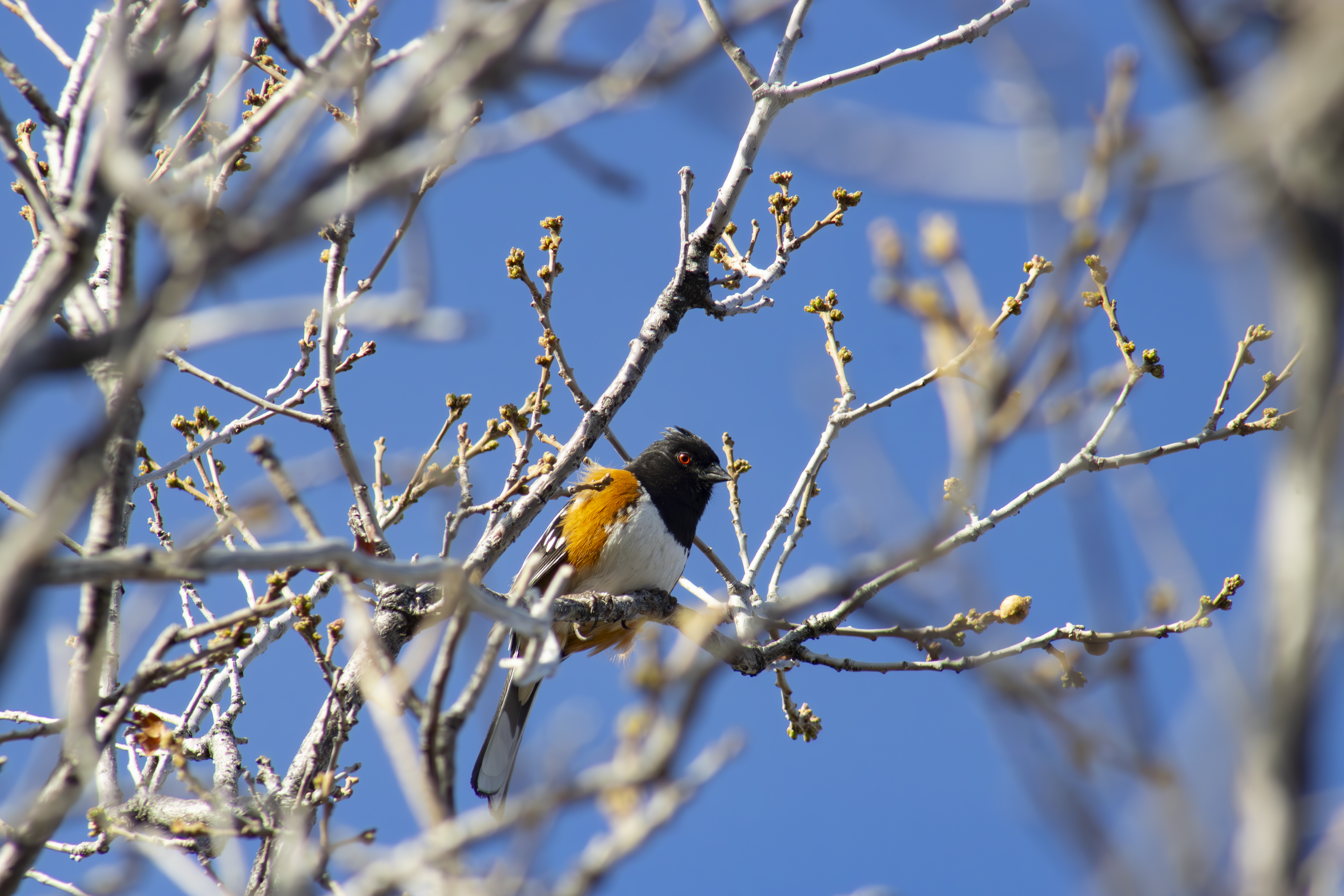
Towhee from Mid April 2025
Spotted Towhees are another very common sight in Ken Caryl, especially in the Spring when the males are hard at work attracting mates. They're small birds, belonging to the Sparrow family. But, they are also quite loud. They're either heard singing from the trees with a repetitive whistle-like call, or they're rummaging through the underbrush in search of seeds and bugs to eat.
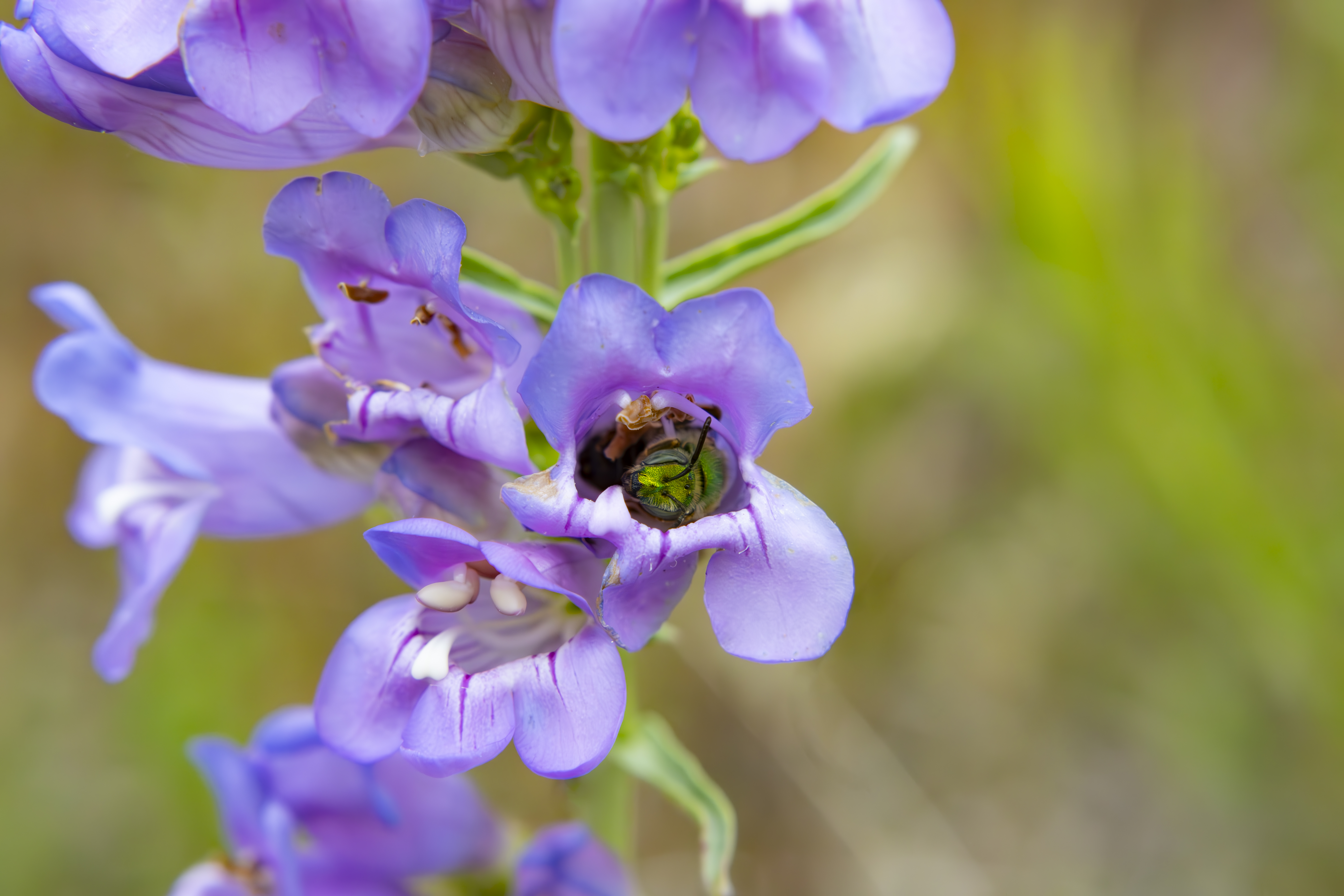
Taken 6-19-2024
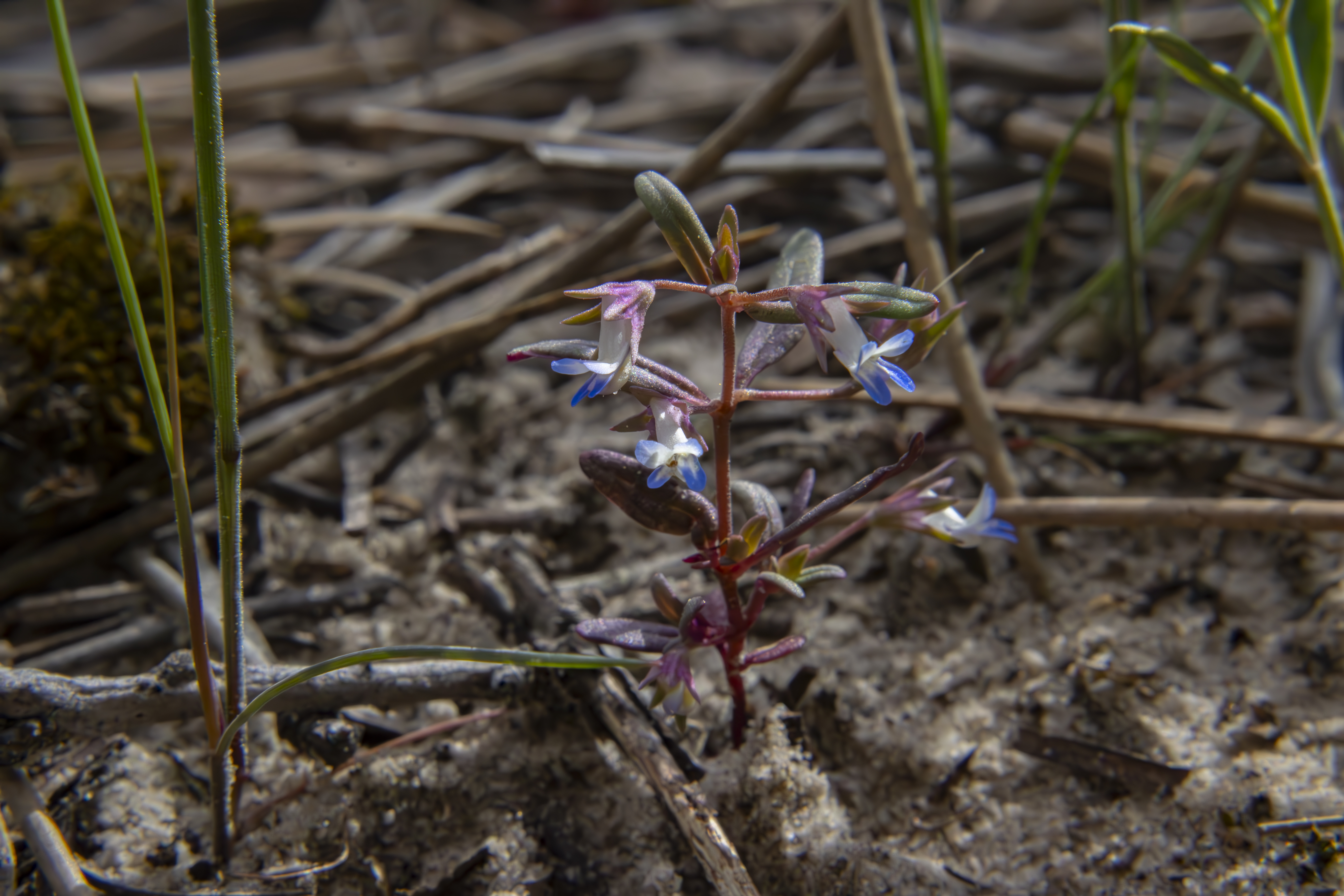
Taken 5-18-2025
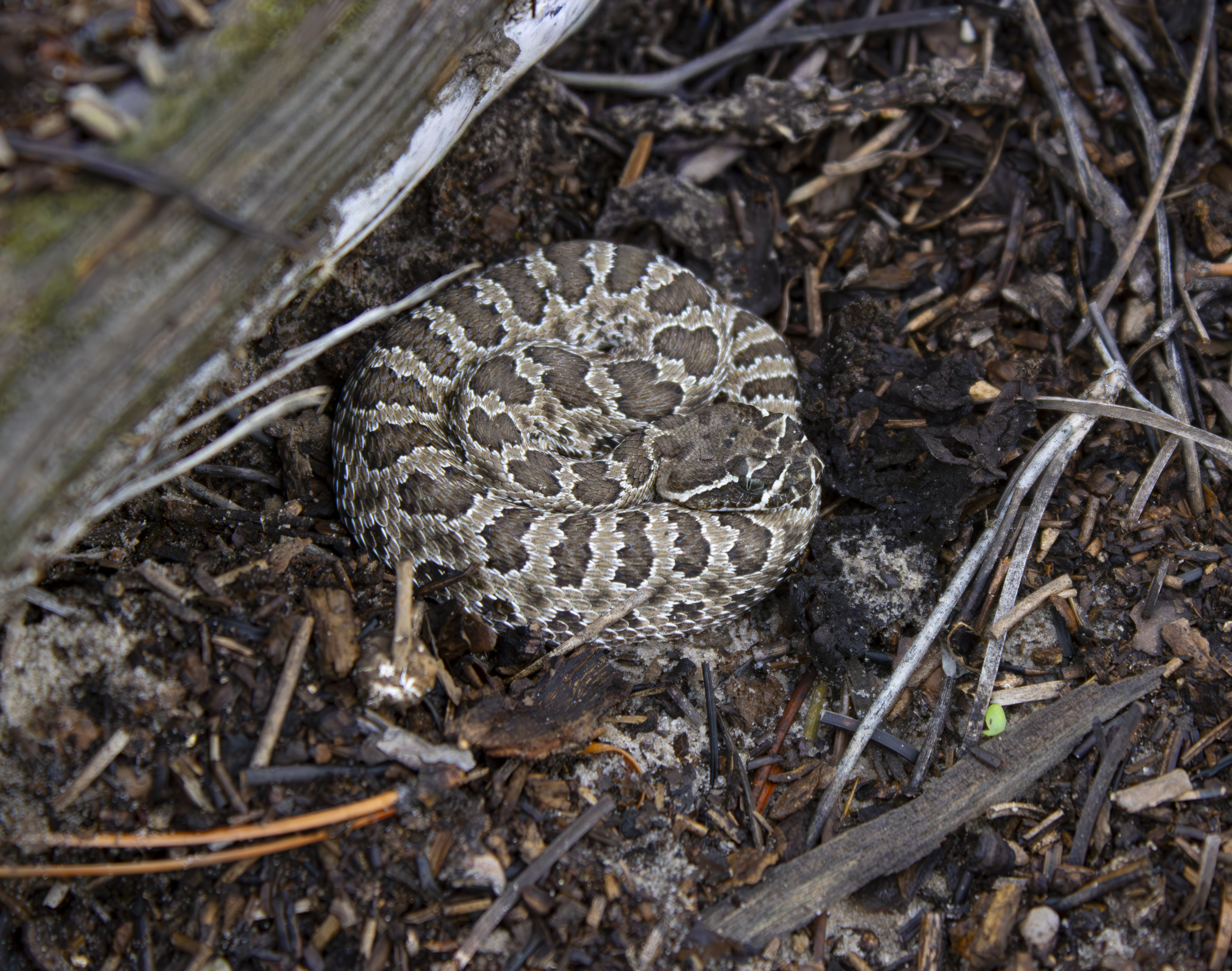
Taken 8-30-2025
Western Massasauga Rattlesnake:
There are dozens of distinct species of rattlesnakes throughout North America. Pictured above is a very small, very young Western Massasauga Rattlesnake. This particular species of rattlesnake is classified as a State Special Concern in Colorado due to their declining populations. In other words, it is quite rare to encounter a Western Massasauga rattler.
The particular snake I photographed was no more than 6 inches long, hiding underneath a small, exposed Ponderosa root on the Ken Caryl hogback. It remained completely still the entire time I was around it, and did not mind my camera getting well within striking distance to capture a series of awesome pictures, including the one above.
Perhaps, that wasn't my brightest idea. However, contrary to popular belief, baby rattlesnakes are no more dangerous than adult rattlesnakes. Just like adult rattlesnakes, baby rattlesnakes can control their venom and are not aggressive.
When threatened, both young and old rattlesnakes will hiss and rattle their tail, before making a run for it. They will only bite if they think they need to in order to survive, but even then, they're capable of delivering bites without secreting venom. It takes days to weeks for a rattler to replenish its venom, which it relies on in order to paralyze their prey. Unlike boa constrictors, rattlesnakes do not strangle their prey to death, so they need to use their venom to secure a meal.
All that said, it's important to respect a rattlesnake's personal space. And always call 9-1-1 if you merely suspect that you've been bitten by a rattlesnake, just to be safe.
Taken 9-28-2025
Taken 3-29-2026
Taken 3-29-2026
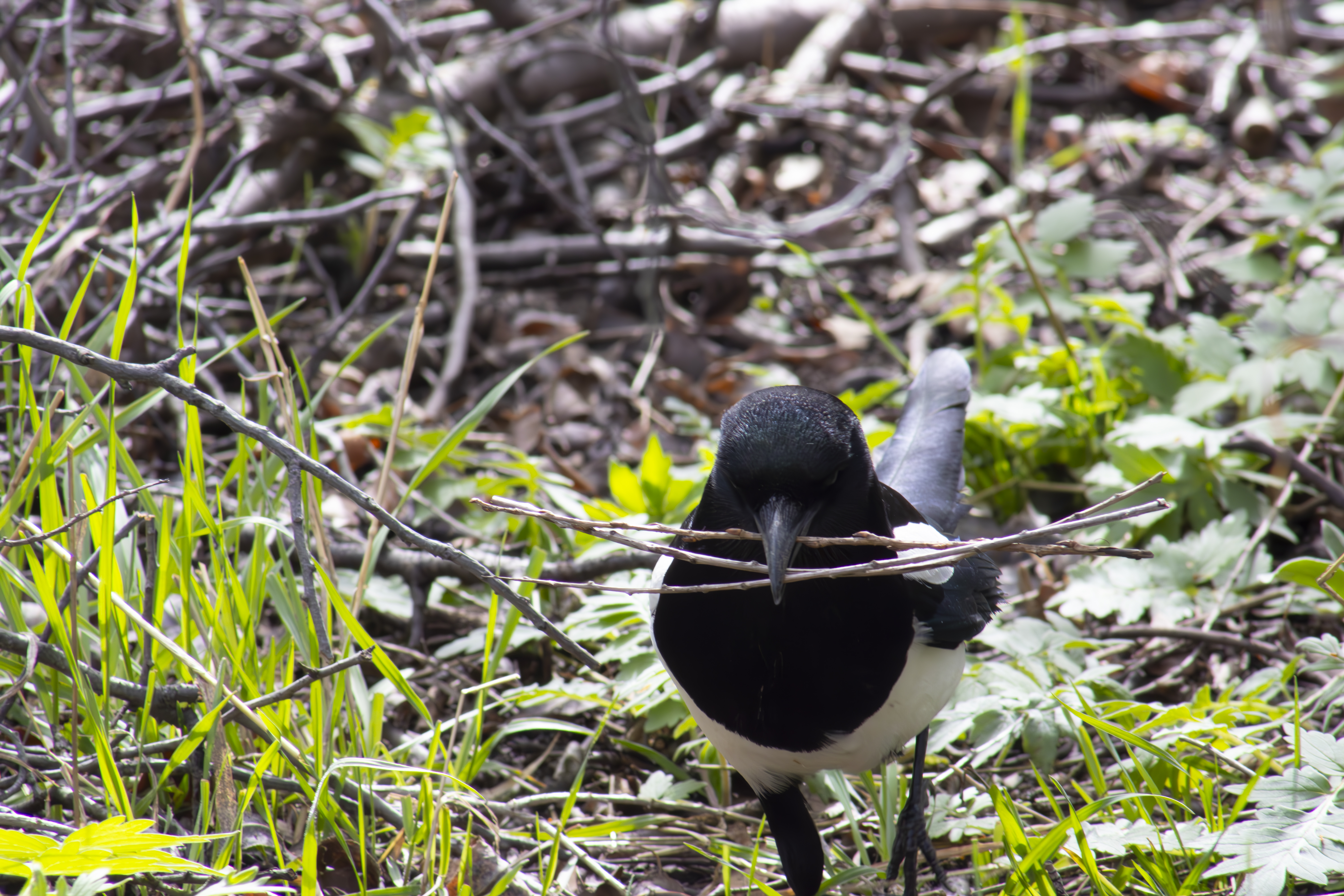
Taken 4-10-2026
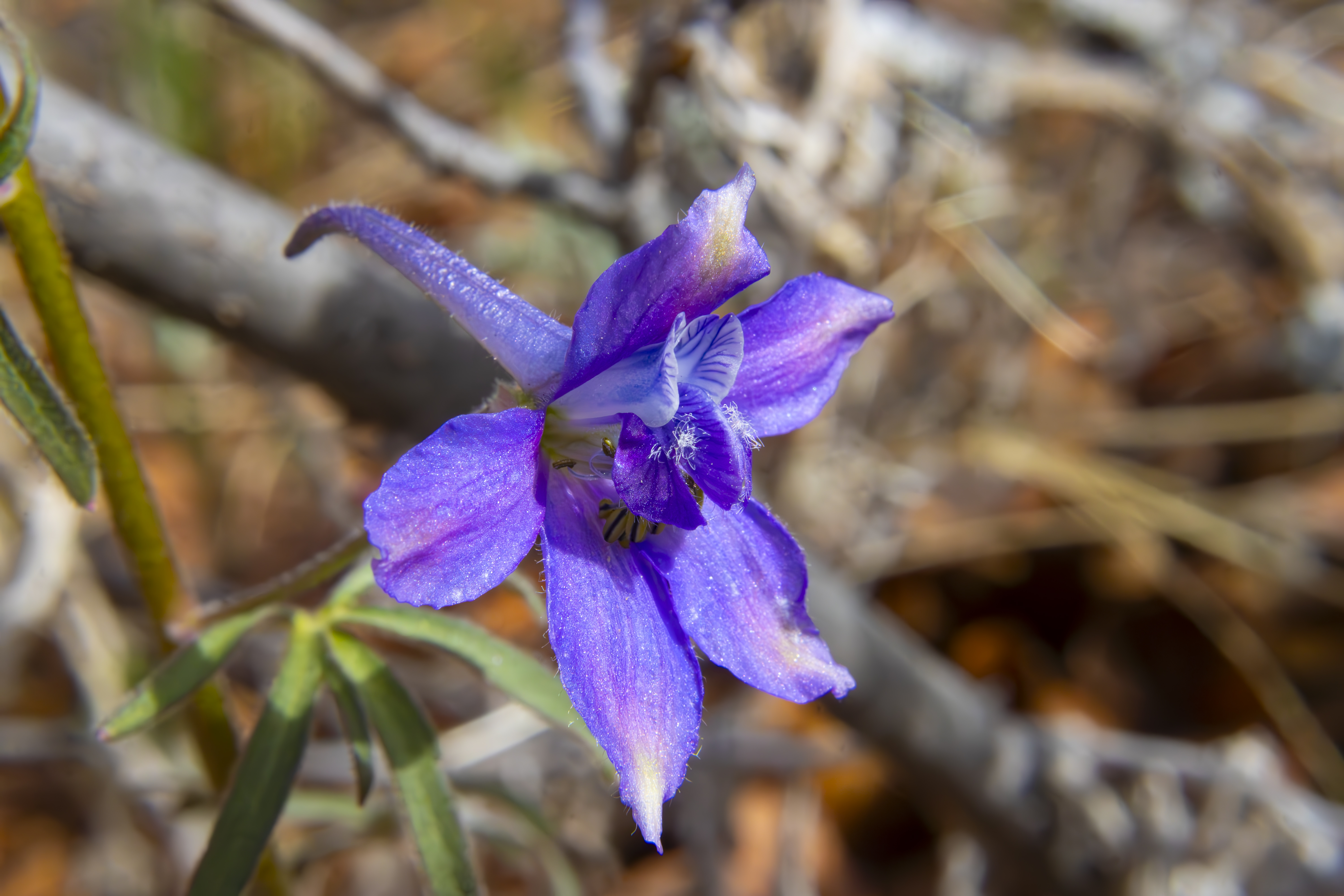
Taken 4-10-2026
Turkey Vulture
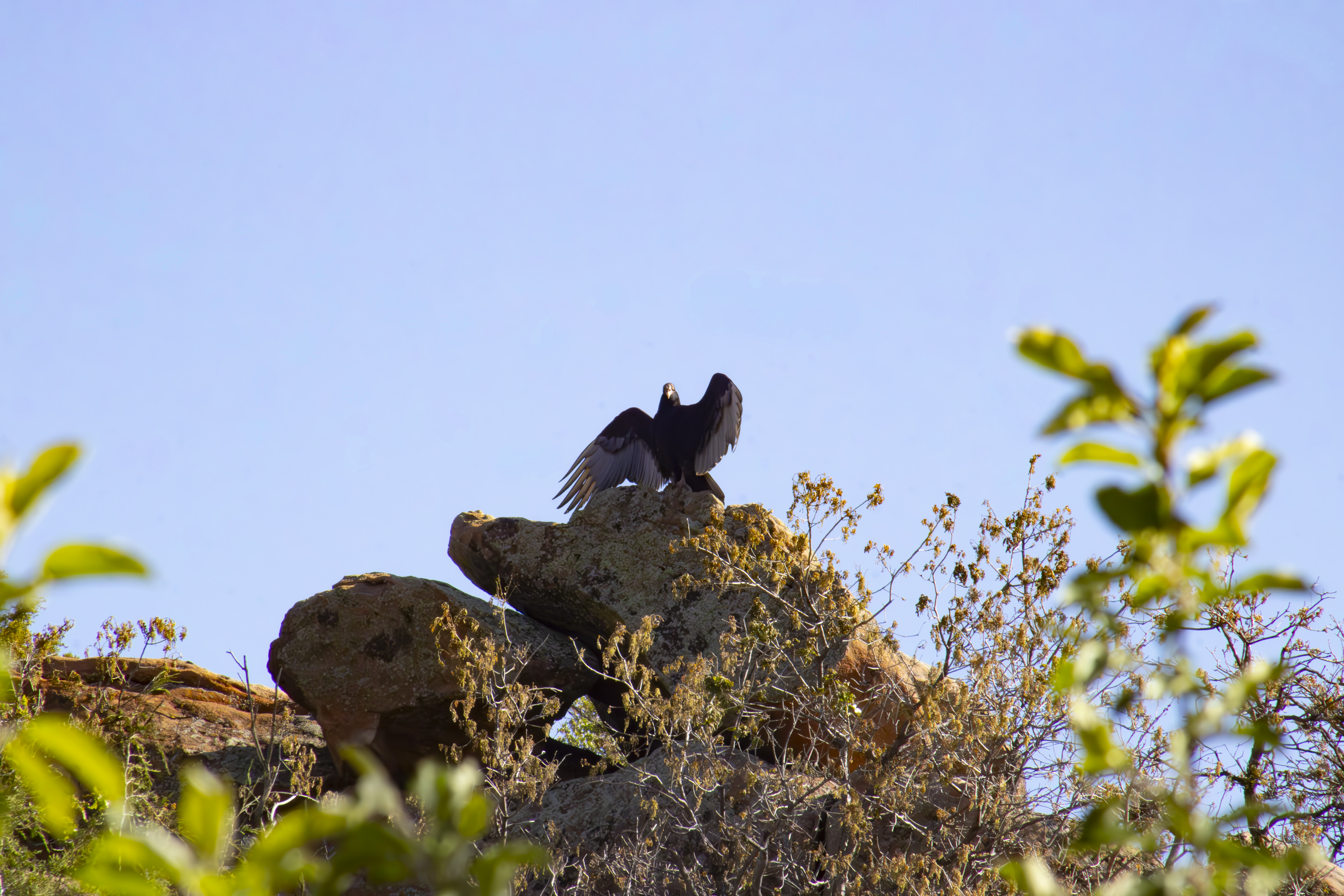
With a wingspan of up to 6 feet, and sharp, curved talons measuring up to 3 inches long, turkey vultures are the most common and widespread vultures in the Americas. Their name comes from the fact that they closely resemble a turkey. However, unlike wild turkeys, turkey vulture heads don’t change color to indicate mood. They’re always a deep, blood red.
Turkey vultures are usually very social animals, except for when they’re circling the skies in search of a meal. They often nest in large groups, and during the breeding season, multiple males often surround a lone female and perform a sort of ritual dance, until the female chooses the male whose dance she likes the most. From there, they will mate for many years, though unlike geese, don’t mate for life.
In other words, turkey vulture couples tend to get sick of each other after a few years, and go on to find other mates to breed within the community.
Once they mate, turkey vultures will find a high place to lay the eggs. Unlike many large birds, turkey vultures do not actually build nests. Instead, they find a place where the eggs won’t roll away, and where their hatchlings will be contained and dry. The parents take turns protecting the eggs and, later on, raising the young.
During our hike in the valley one spring morning, Eric and I stumbled upon a turkey vulture sunning itself on a rock. This behavior is awesome but not uncommon. Turkey vultures are perpetually cold, especially in the morning after their body temperature drops to 93 degrees Fahrenheit as they sleep. On top of that, when it gets really hot outside, turkey vultures will purposefully take a dump on their legs so that it cools them off as it evaporates. This behavior is known as Urohydrosis.
Some scientists have hypothesized that, due to turkey vultures being mostly scavengers who have a habit of pooping on themselves to stay cool, they will sun themselves to kill off harmful bacteria with the UV light.
As gross as they are, turkey vultures are still extremely important for the natural environment, and are strictly protected by the Migratory Species Act of 1918.
